
We are proud to announce the launch of the AbuseIPDB Gravity Forms Add-On!
With this new integration, every form submission is checked against AbuseIPDB’s global database of reported IP addresses, so the worst offenders will be caught and marked as spam before they reach your entry list or CRM.
Read on to find out how it works and how to get started with AbuseIPDB today…
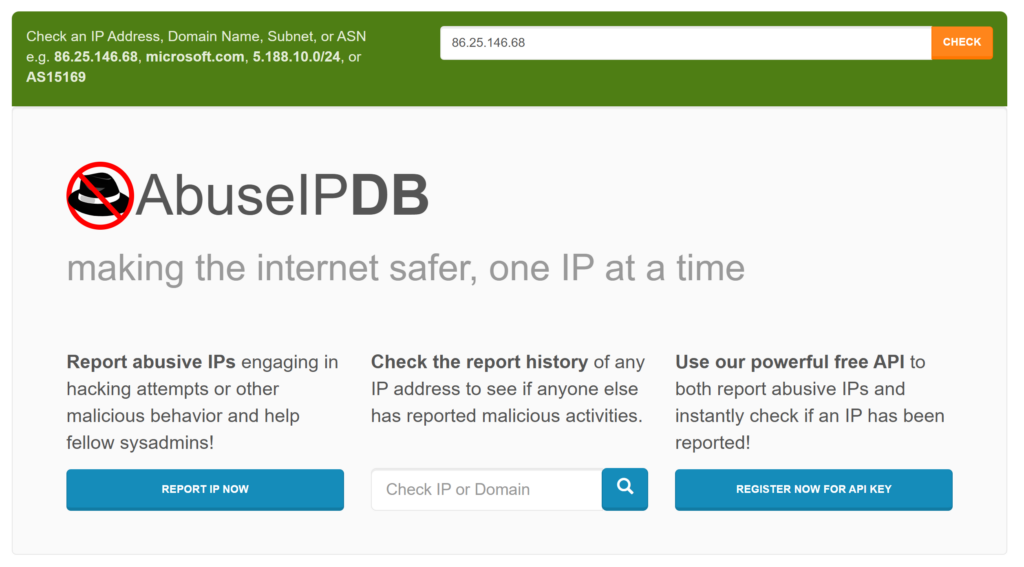
AbuseIPDB is a project dedicated to fighting hackers, spammers and online abuse activities. It maintains a central database of IP addresses that have been reported by webmasters and system administrators worldwide for spam, fraud, hacking attempts, and other abuse.
What makes it smarter than static block lists is its scoring. Each IP gets an abuse conviction score from 0 to 100, based on how recent and how often it was reported. Scores are recalculated daily, and older reports have less weight over time, so they reflect what IP is doing today, not what it was doing two years ago.
A free AbuseIPDB account includes 1,000 IP checks per day, covering most sites, and paid plans are available for higher volumes.
Meet the AbuseIPDB integration
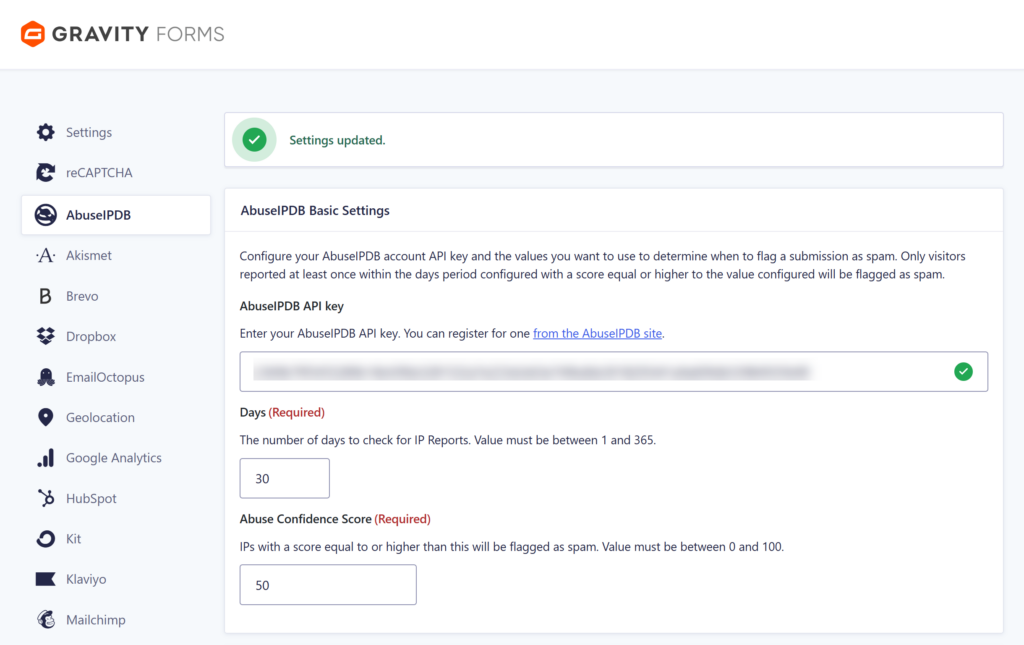
The new AbuseIPDB integration puts that global database to work on your forms. When someone submits a form, Gravity Forms sends the IP address to AbuseIPDB, gets a trust score back, and marks the entry as spam if it passes your threshold. You decide how strict your form is.
Key features of the AbuseIPDB integration include:
- IP score filtering – Set your abuse conviction score threshold, and any posts at or above it are automatically marked as spam. You also control the reporting window, from 1 to 365 days, so you can choose how far back the checks appear.
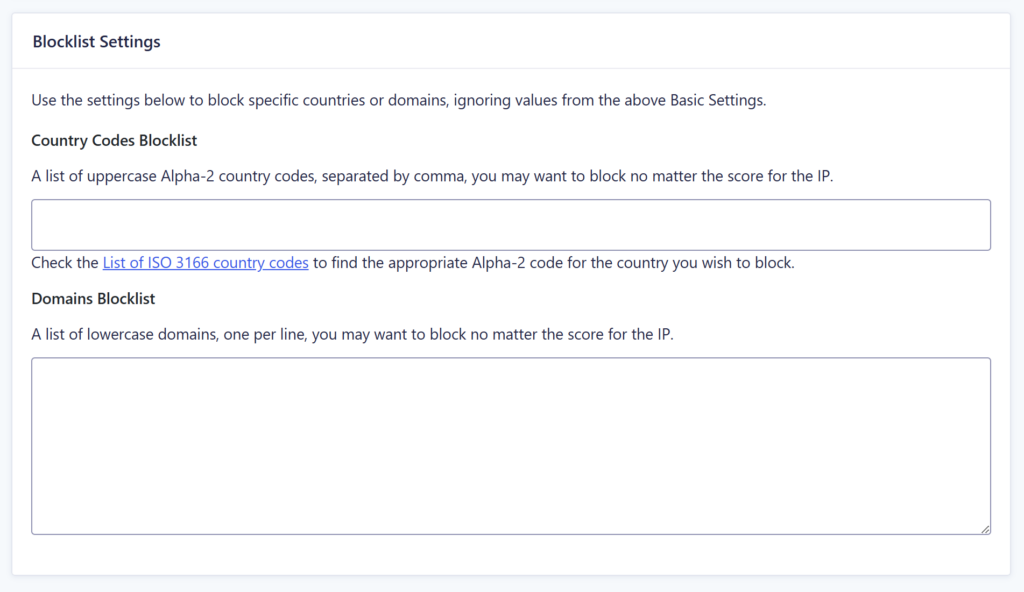
- Country block list – Block posts from certain countries using the standard two-letter country code. Countries on the block list will be blocked regardless of their IP score.
- Domain block list – Block posts from domains associated with known bad actors, regardless of score.
- Two-way reporting – Mark an entry as spam in WordPress and the IP can be reported back to AbuseIPDB as Web Spam, so your report helps protect every other site that uses the database.
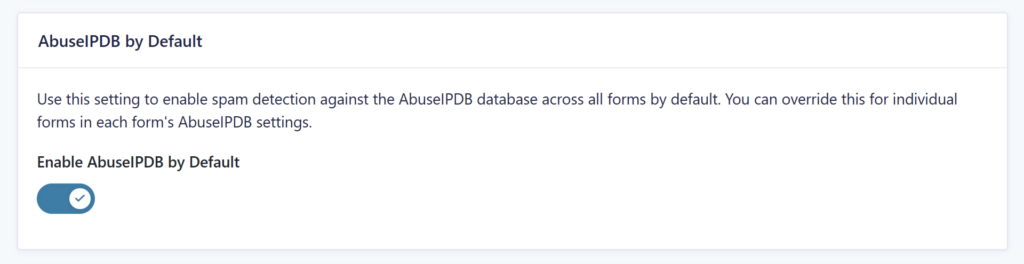
- Global or performance control – Enable AbuseIPDB on every form on your site with a single button, or enable it for individual forms only.
There’s a paper trail too. The entry details sidebar includes an AbuseIPDB metabox with a linked IP address, so you can click through and see exactly why the post was flagged.
For more information, see the AbuseIPDB documentation.
AbuseIPDB is one of several ways Gravity Forms helps you fight spam, and this method works best when done in layers.
- Akismet checks posts against a global spam database and automatically filters out malicious entries.
- reCAPTCHA support includes Google reCAPTCHA v2 and v3.
- Cloudflare Turnstile offers a privacy-friendly CAPTCHA alternative.
- Honeypot Protection uses hidden fields to catch bots without affecting real users.
Combine AbuseIPDB’s IP reputation checks with one or more of these anti-spam tools, and very little will slip through the cracks.
Get AbuseIPDB integration
The AbuseIPDB Add-On is available with every Gravity Forms license. For all active license holders, here’s how to get it…
New to Gravity Forms? Try our free demo then come back to check our pricing to find the right license for you.
As always, don’t hesitate to contact our friendly support team – we’re here to help if you have any questions or need guidance on getting started.

Bulletin
If you want to stay up to date on what’s happening on the blog, sign up for the Gravity Forms newsletter!
“*” indicates a required field
PakarPBN
A Private Blog Network (PBN) is a collection of websites that are controlled by a single individual or organization and used primarily to build backlinks to a “money site” in order to influence its ranking in search engines such as Google. The core idea behind a PBN is based on the importance of backlinks in Google’s ranking algorithm. Since Google views backlinks as signals of authority and trust, some website owners attempt to artificially create these signals through a controlled network of sites.
In a typical PBN setup, the owner acquires expired or aged domains that already have existing authority, backlinks, and history. These domains are rebuilt with new content and hosted separately, often using different IP addresses, hosting providers, themes, and ownership details to make them appear unrelated. Within the content published on these sites, links are strategically placed that point to the main website the owner wants to rank higher. By doing this, the owner attempts to pass link equity (also known as “link juice”) from the PBN sites to the target website.
The purpose of a PBN is to give the impression that the target website is naturally earning links from multiple independent sources. If done effectively, this can temporarily improve keyword rankings, increase organic visibility, and drive more traffic from search results.
Jasa Backlink
Download Anime Batch